History and Impact
Growth

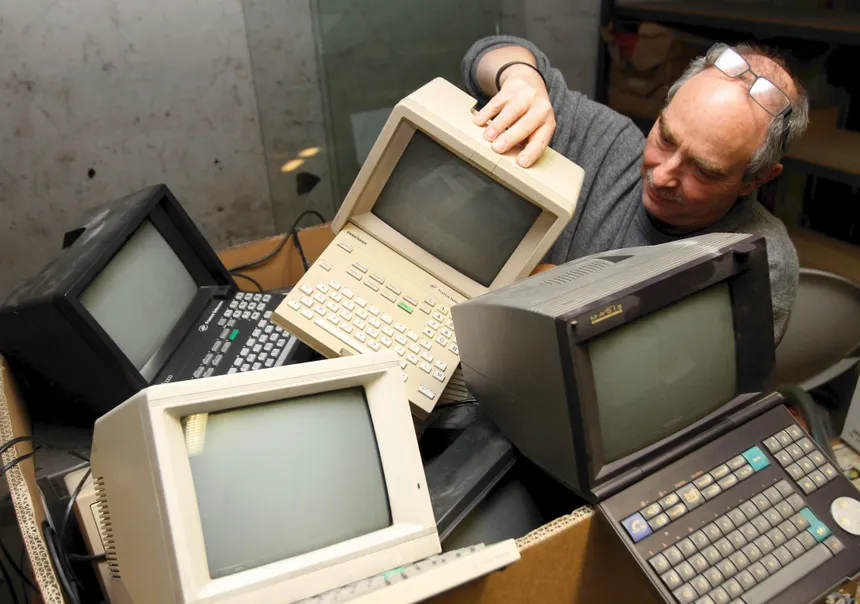
By early 1986, 1.4 million terminals were connected to Minitel, with plans to distribute another million by the end of the year. To reduce opposition from newspapers worried about competition from an electronic network, they were allowed to establish the first consumer services on Minitel. Libération offered 24-hour online news, such as results from events at the 1984 Summer Olympics in Los Angeles that occurred overnight in France. Providers advertised their own services in their own publications, which helped market the overall Minitel network. Others founded newspapers solely to create Minitel services.
By 1988, three million terminals were installed, with 100,000 new units installed monthly. The telephone directory received 23 million calls monthly, with 40,000 updates daily. About 6,000 other services were available, with 250 added monthly. France Télécom estimated that almost 9 million terminals—including web-enabled personal computers (Windows, Mac OS, and Linux)—had access to the network at the end of 1999, and that it was used by 25 million people (of a total population of 60 million). Developed by 10,000 companies, in 1996, almost 26,000 different services were available.
Payment
There were two payment methods available:
-Credit card for purchases
OR
-Telephone bill for surfing time (rates depended on the sites visited)
Users first subscribed to individual services, but traffic grew quickly after the telephone company offered a "kiosk" model (named after newsagent's shops). Minitel and voice charges appeared combined on the monthly telephone bill, with no breakout of fees. Service providers received two-thirds of the US$10 an hour that customers typically paid as of 1988. As the telephone company handled bill collection, and users who did not pay bills lost telephone service, the customer acquisition cost for service providers was low. The single bill encouraged impulse shopping, in which users intending to use one service found and used others while browsing. As users' identities and services were anonymous, Minitel use was high at work where companies paid for telephone service.
Minitel and the Internet
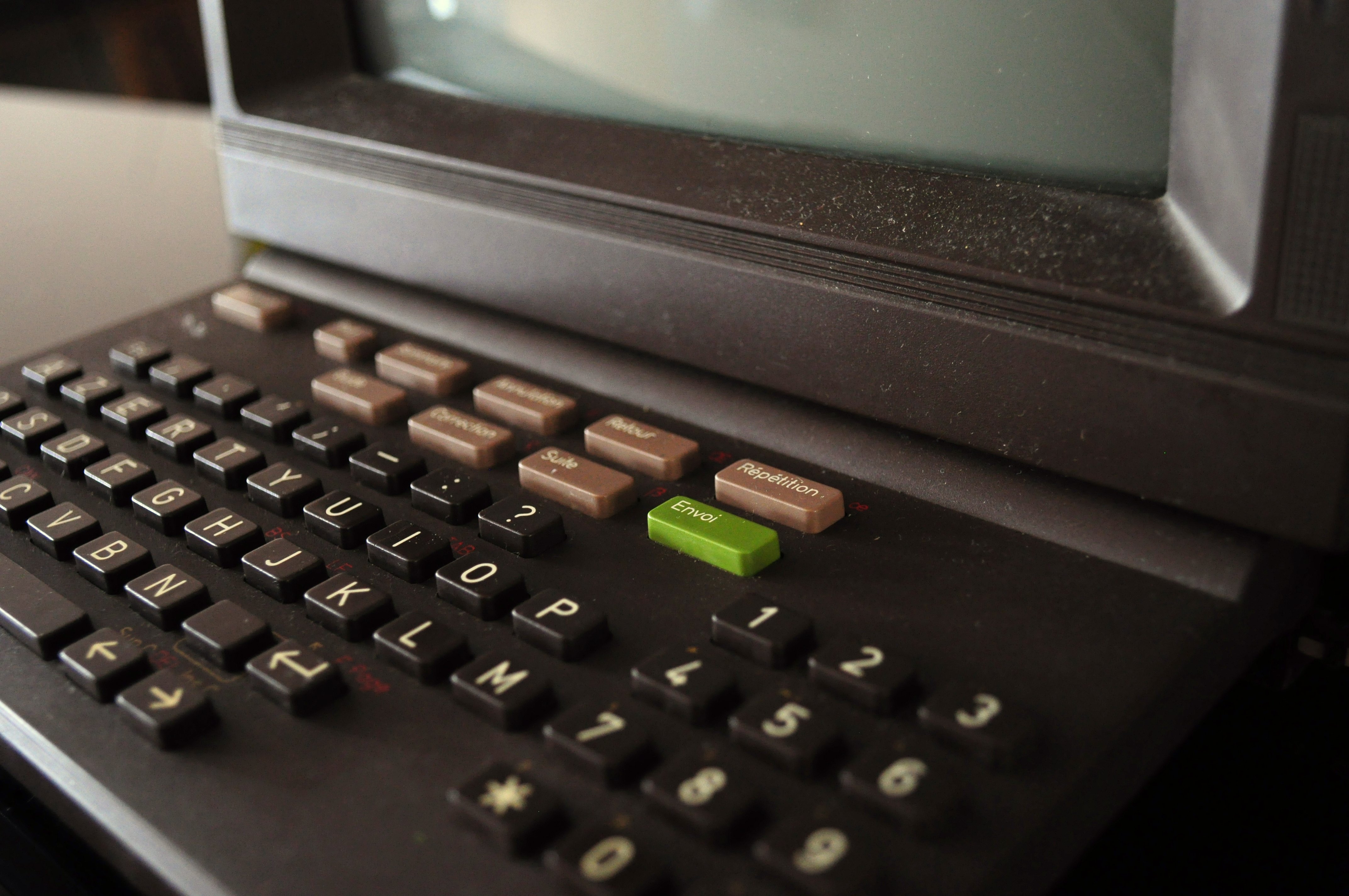
The extent to which Minitel enhanced or hindered the development of the Internet in France is widely debated. On the one hand, it included more than a thousand services,
some of which predicted common applications on the modern Internet. For example, in 1986, French university students coordinated a national strike using Minitel,
demonstrating an early use of digital communication devices for participatory technopolitical ends.
Alternatively, the French government's attachment to the natively developed Minitel may have slowed the adoption of the Internet in France; in the 1990s there was a peak of nine million terminals and there were still 810,000 terminals in the country in 2012. In the short term, some resources at France Telecom (now Orange) were dedicated to the development of Minitel that might have otherwise been focused on Internet development. However, France Telecom's focus on Minitel had little or no long-term effect on adoption or development of internet- and web-based companies in France rank roughly equal to the US and Germany in the current penetration of high-speed internet in households.
Canadian history
Bell Canada experimented with a Minitel-like system known as Alex with terminals called AlexTel. The system was conceptually similar to Minitel, but used the Canadian
NAPLPS protocols and North American Bell System RJ-11 standard telephone connectors. Originally launched experimentally in the Montreal area, Alex was then launched
in most areas served by Bell Canada (primarily Ontario and Quebec) with offers of a free trial period and terminal.
The principal information offering was the telephone directory. Although branded as a "bilingual" (English and French Canadian) service, the majority of other services offered were the experimental ones originally offered in Quebec and completely Francophone. Retention rates were reportedly close to zero. The service closed down shortly after exiting the experimental stage. Telidon was an earlier Canadian text and graphics service using the same technological underpinnings.